
Finding Greenfield Resident Records
Greenfield keeps its resident records in layers. City, county, and state offices each hold a piece. An address belongs first in the City of Greenfield property search. Follow a known owner through county recorded documents. A name might surface in Wisconsin court summaries, MyVote, or a licensed newspaper archive. Older households call for city and reverse directories at Milwaukee Public Library, which can bridge the years between census releases. The Greenfield residents directory is really this sequence of official and library sources, not a claim that any one list is complete.
Pick each record for what it proves. Assessment data ties an owner of record to a parcel on a given roll date. A deed names only the parties to a transfer. MyVote confirms a registration through a narrow public interface. Historical directories may add spouses, occupations, or roomers. Record the spellings, dates, source names, and any tax key or document number. Those details keep same-name neighbors from blurring together.
- Enter the street number and name in the Greenfield property search, then save the owner, address, tax key, and lookup date.
- Use Wisconsin MyVote by name for registration confirmation or by address for polling and district information.
- Take the owner name or document reference to the Milwaukee County Register of Deeds search.
- For earlier residents, ask library staff for the correct Milwaukee suburban directory, reverse directory, newspaper, or census route.
- If a portal ends, send a narrow request to the office that actually keeps the record.
Even a correct search can come back empty. Old spellings, earlier street numbers, coverage gaps, and protected addresses all hide records. A blank result means the query should change, not that the person never existed.
Greenfield Directory Record Keepers
Three offices anchor Greenfield's record keeping. The City Assessor holds assessment rolls. The Milwaukee County Register of Deeds records real-estate instruments. The City Clerk keeps municipal records and elections. Each maintains its own index and its own rules. Assessor staff can explain roll information when the public address form is too narrow. Register of Deeds staff will point the way to historic books or microfilm. They do not build a full ownership chain. The clerk routes ordinance, license, and election requests. For address-level methods, turn to the Greenfield street directory.
Milwaukee County Register of Deeds
901 N. 9th St., Room 103
Milwaukee, WI 53233
414-278-4021
City of Greenfield Assessor
7325 W Forest Home Ave., Room 202
Greenfield, WI 53220
414-329-5340
Greenfield City Clerk
7325 W Forest Home Ave., Room 102
Greenfield, WI 53220
414-329-5219
Search Greenfield Property Records
The Greenfield assessor property search takes a tax key, a house number, or a street name. Results return owner name, address, and tax key. The opening form exposes no owner-name field. That matters when only a name is known. Consult the published assessment roll, or ask assessor staff to locate the entry, and keep the roll year with any values and classifications, since assessment data changes over time.
| Greenfield field | Entry type | Best use |
|---|---|---|
| Tax Key No | Text, optional | Exact parcel match |
| House No | Text, optional | Narrow one address |
| Street Name | Text, optional | Find a street segment |
| Search | Button | Return matching parcels |
Read each address separately. The mailing address and the situs, or physical, address serve different purposes, since a tax notice can travel to an agent, a post-office box, or another city. The tax key is the stronger bridge to deeds, plats, and parcel documents.
The live Greenfield property form displays the assessor's official fields.
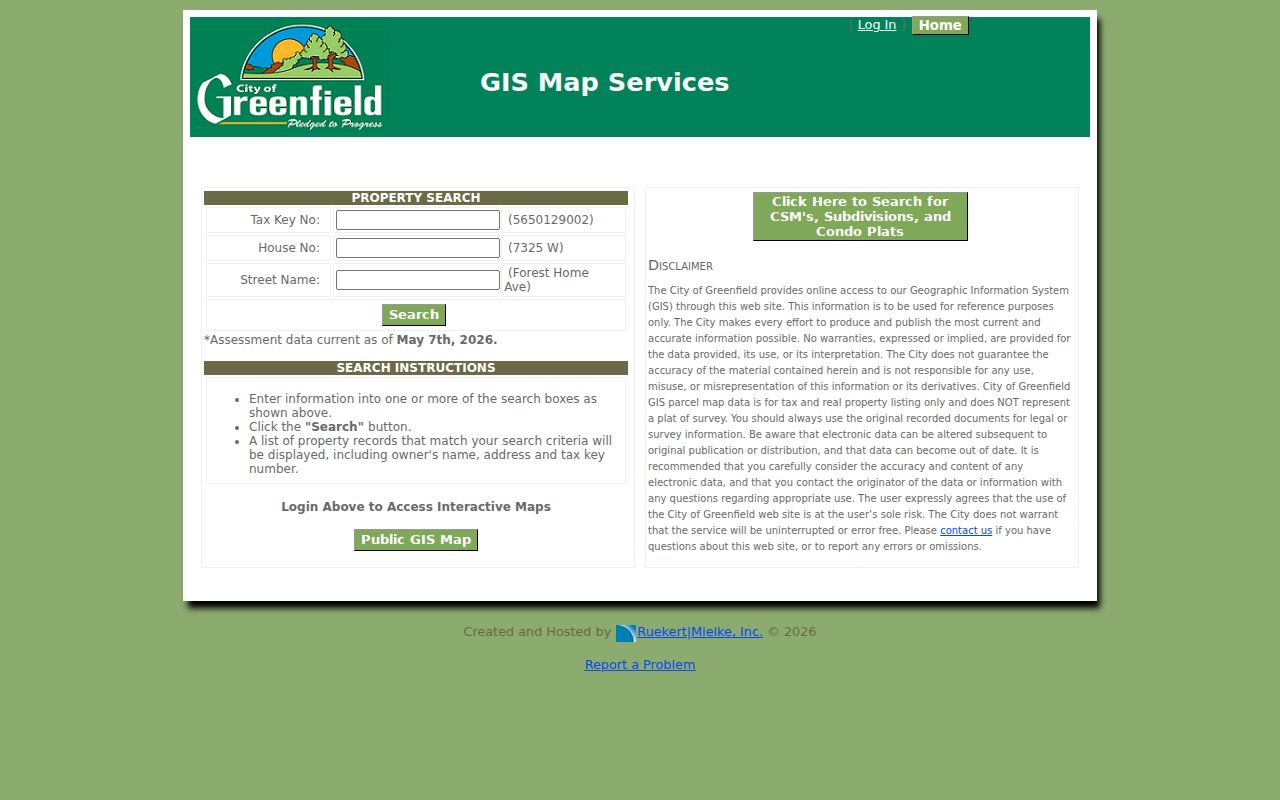
The form shows its address-first design plainly. A matched parcel points the user onward to the city GIS viewer.
Greenfield Parcel Terms Decoded
Greenfield parcel records lean on short terms with distinct meanings. Defining them before a residents directory search keeps a mailing contact from being mistaken for someone living at the site.
- Parcel
- A mapped unit of land used for tax and record purposes.
- Situs address
- The physical location assigned to the parcel.
- Tax key
- The parcel identifier used to connect city assessment and map records.
- Index
- A finding tool that points to a document; it is not always the full image.
- Criss-cross directory
- A directory arranged by street address rather than only by surname.
Ordinary street labels can change. Legal descriptions, lot and block references, certified survey maps, and condominium documents stay steady through those changes, and the Greenfield document search offers modes for CSMs, subdivisions, and condominiums.
Wisconsin Voter Lookup Limits
Wisconsin MyVote offers two separate paths. Name mode requires a first name, a last name, and a birth date. Address mode requires a street address, city, and ZIP, with a unit field available. Name results support registration and voting-history checks, while address results focus on the polling place, ballot, and election details.
Wisconsin does not register voters by party. Voting history never reveals a ballot choice. MyVote is also narrower than a full voter-file request. Wis. Stat. §6.36 permits inspection or electronic access to the registration list, subject to protected fields and election rules. Social Security and driver-license numbers, full birth dates, confidential addresses, and Safe at Home actual addresses stay private.
The MyVote registration page anchors Greenfield voter confirmation.
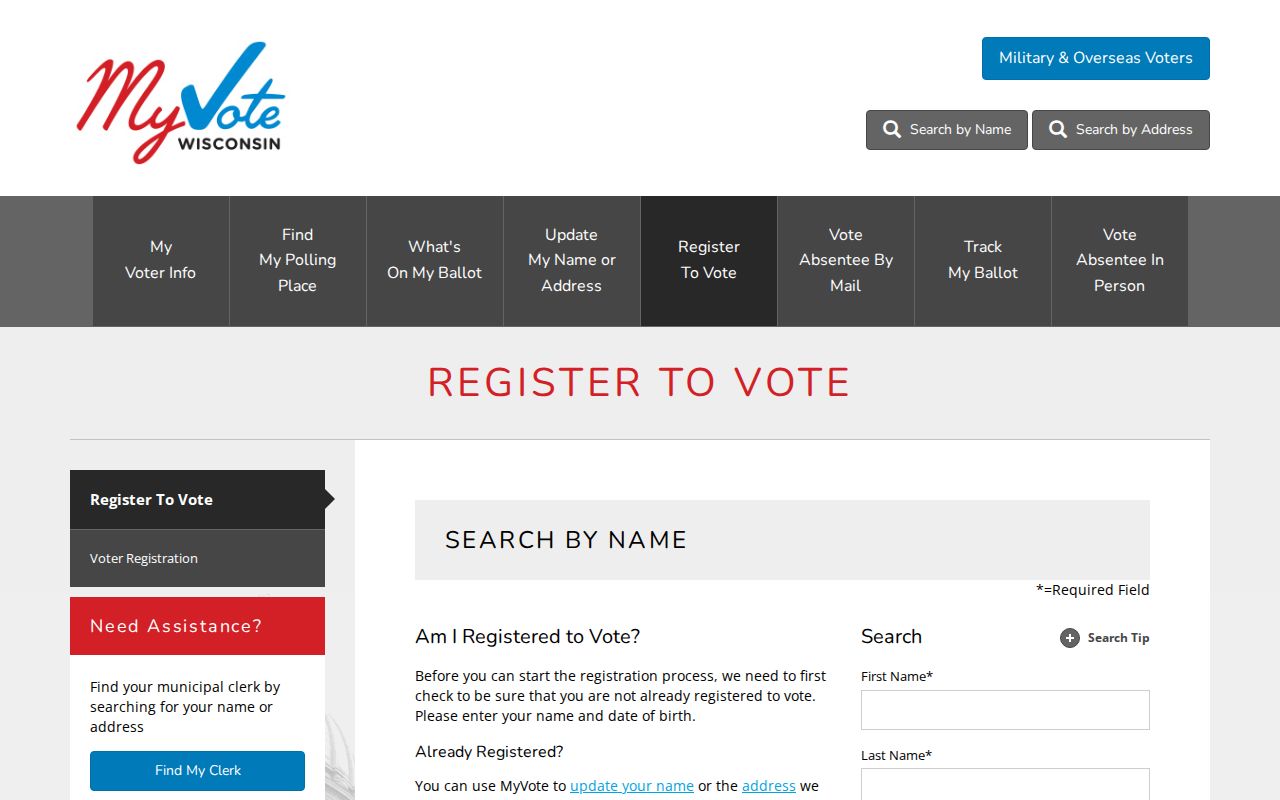
Nicknames and approximate ages often fail these fields. A clerk request or a historical source handles those cases. Note: A registration date is not a move-in date, and list maintenance can change a record without marking a household event.
Milwaukee County Deed Names
Milwaukee County Register of Deeds indexes deeds, mortgages, assignments, liens, plats, and related instruments. Modern Tapestry searching can use a first and last or business name. It also works by document number, document type, recorded-date range, subdivision, lot, block, parcel number, and other tract details. An instrument names parties to a recorded event. It does not show every occupant.
Coverage changes by era. All recordings from 1962 forward can be searched through modern grantor, grantee, tract, or document references. Deeds from April 1, 1948 forward support those routes. Deeds from 1835 through March 31, 1948 require document number or book and page. Copies may be requested by mail, phone, or at the office. A historical appointment helps with books and microfilm when remote search ends.
For deed and tract research, the county real-estate-records page displays the search entry points. It also lists request details.
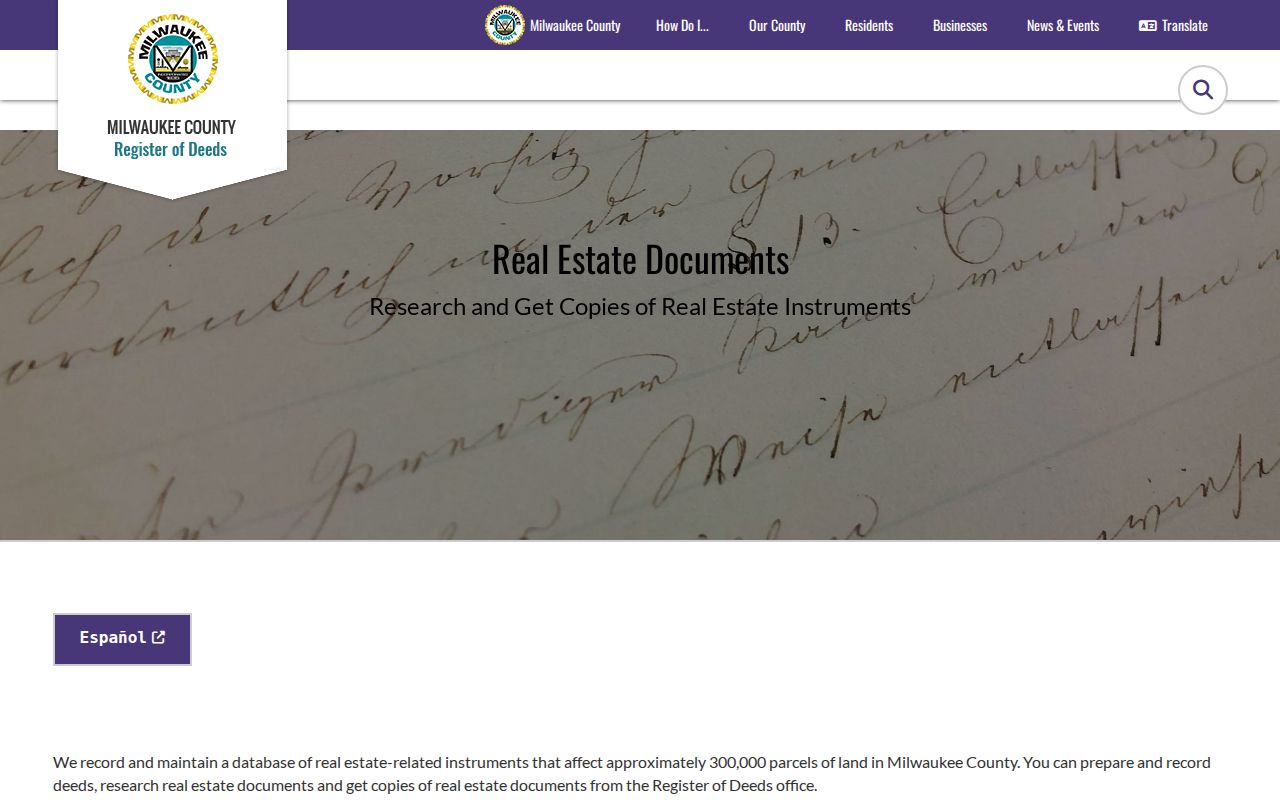
That official page confirms coverage, copies, and search instructions.
Current Greenfield Directory Sources
Current Greenfield names surface in property, election, court, and business records. None is a single household roster. Each serves a distinct public duty, so weigh its scope and limits before treating a match as current residence in the Greenfield residents directory.
| Source | Who It Lists | Keeper | Access |
|---|---|---|---|
| Assessment roll | Owners of record | Greenfield Assessor | Free form, roll, or office |
| MyVote | Registered voters searched one at a time | Wisconsin Elections Commission | Public lookup with required fields |
| Recorded-document index | Parties to deeds, liens, and mortgages | Milwaukee County ROD | Paid Tapestry or office search |
| WCCA | Parties in public circuit case summaries | Wisconsin Court System | Free summary; clerk copies |
| City staff pages | Public city contacts | City departments | Free online |
An assessment record names the owner of record. MyVote confirms one registered voter. WCCA returns a public court case summary. A deed index tracks title history better than daily presence, and commercial people-finders can merge stale or unrelated data. Official sources name their custodian and record date, yet official is not the same as complete, so verify any key conclusion elsewhere.
Lawful use. Greenfield public records support family, property, civic, and safety research. Never use a name or address to stalk, harass, threaten, or harm someone.
Greenfield Court Name Searches
Wisconsin Circuit Court Access, known as WCCA, searches public circuit case summaries statewide. It also works by county. The simple form takes a party surname, given and middle names, birth-date limits, business name, and county. A case number works too. Results differ by case type. They may show a case number, caption, filing date, party role, claims or charges, disposition, and status. A balance can appear as well. A WCCA result is not a certified record. It is not a full image set either. Protected, sealed, juvenile, adoption, and some family matters are absent or limited. Greenfield Municipal Court posts contact and payment details. It offers no public name-search index. A local citation means contacting the court with the citation number or date. Circuit files and copies go through the Milwaukee County Clerk of Circuit Court.
Greenfield Vital Record Routes
Modern birth, death, marriage, and divorce records flow through the Wisconsin DHS Vital Records office or an eligible local registrar route. Wis. Stat. §§69.20–69.21 limit ordinary certified-copy access. The limit turns on relationship or direct tangible interest. An index clue is not an unrestricted certificate. Family history takes a different path. The Wisconsin Historical Society posts pre-1907 indexes and Area Research Center routes. Its holdings through September 30, 1907 may list a name, event date, county, reel, or record number. Weak early registration and spelling errors leave gaps, and forms or service status change, so use the live DHS applications page before ordering.
Greenfield Library Research Split
Local tools start at the library. The Greenfield Public Library databases open genealogy and newspaper access. Ancestry Library Edition works inside the library. HeritageQuest, newspaper archives, and other products carry card or location rules. A notice or obituary can yield a resident clue. Preserve the newspaper title, issue date, page, and stable archive link. Milwaukee Public Library holds the deeper regional shelf. Its Zeidler Room keeps directories, telephone books, maps, atlases, archives, and photographs. The published city-directory run starts in 1847. Greenfield may appear in suburban or metropolitan volumes rather than every Milwaukee city edition, so ask staff to confirm the exact volume before treating a blank page as a missing person.
Greenfield Addresses Can Disappear
Old Greenfield searches can fail. The household may never have moved. Milwaukee Public Library points researchers to a 1930 supplement that converted address numbers and street names across the city. Bresser's Cross-Index Directory covered metropolitan Milwaukee and its suburbs from 1969 through 2000, and each volume needs checking for Greenfield coverage. MPL's directory instructions reach back to 1921 for address searching, and Greenfield itself shrank from a 36-square-mile township through annexations and boundary changes in 1952 and 1957. The record keeper depends on date and place. Record the address exactly as printed. Add a separate normalized address, postal city, tax key, and source year. That habit shields the trail from modern labels.
Greenfield ZIP Labels Mislead
Greenfield is served by 53219, 53220, 53221, and 53228. Wisconsin reference material treats Greenfield as an alternate city name, with Milwaukee the preferred postal name for these ZIP codes. The codes cross municipal boundaries. A Milwaukee label can point to a Greenfield parcel. A ZIP alone proves nothing about city jurisdiction. Verify the postal form of a complete address with the USPS ZIP Code Lookup. Then check the Greenfield assessor or GIS for municipal location. A ZIP is a delivery area, not a ward, parcel, school district, or list of people.
Protected Greenfield Resident Addresses
The Wisconsin Safe at Home program, authorized by Wis. Stat. §165.68, assigns eligible Greenfield participants a substitute address for public records. Election and court handling can then show the substitute address. Federal and Wisconsin privacy rules restrict DMV personal information as well.
A blank field is not always an error. It can reflect a legal protection. Never infer one from relatives, parcels, or neighboring records. Request only what serves a lawful purpose, and accept a custodian's redaction or written explanation.
Request Greenfield Records Directly
Wisconsin's Public Records Law, Wis. Stat. §§19.31–19.39, lets any person ask the office that keeps a record. Requests can be oral or written. State guidance urges a response as soon as practicable. No single fixed deadline covers every request. A written request still creates a useful trail.
Name the record type, date range, subject, agency or program, and preferred format, and ask for a segregable copy if part may be withheld. Fees generally reflect the direct cost of locating or reproducing the material. Local schedules can differ. For routing, the Wisconsin DOA request guidance explains which custodian to contact, and the state request page carries the same routing details.
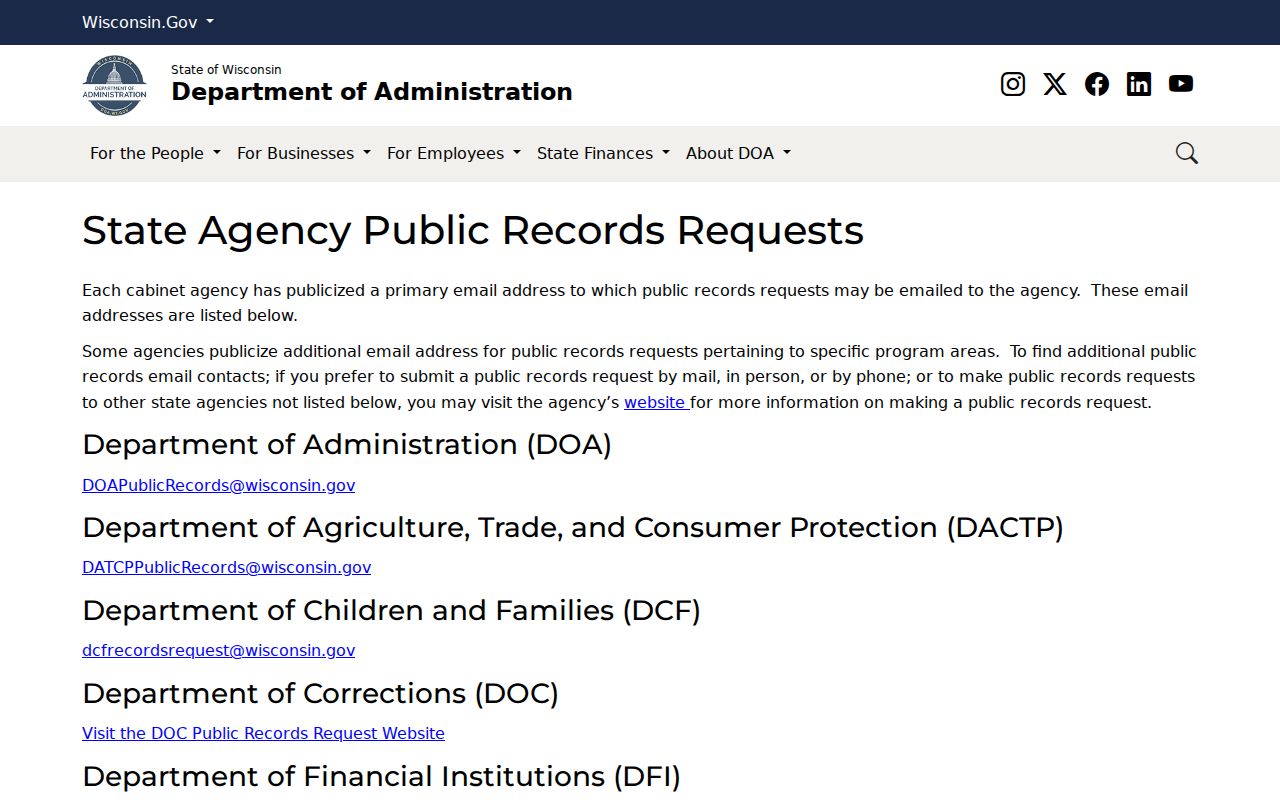
The state page reinforces one point. Every request goes to the agency program holding the specific record, not to a single statewide search desk.
Historical Greenfield Resident Directories
Old regional directories live at the library. The Milwaukee Public Library local-history collection holds Milwaukee city directories from 1847 to the present. Name access spans the full run. Address searching starts in 1921. Print, microfiche, microfilm, and digitized access all vary across those years. Check metropolitan, suburban, telephone, or reverse volumes for Greenfield coverage.
A historical entry may list a surname, given name, spouse, street address, and occupation or business. Some editions mark owner, renter, widow, roomer, or householder. Those labels describe that edition alone. Pair each directory year with census, newspaper, assessor, and deed evidence; the Greenfield city directories collection page lays out the full shelf and entry-reading method.
Note: Publication dates and compilation dates can differ, so treat each year as a dated snapshot rather than an exact move date.